

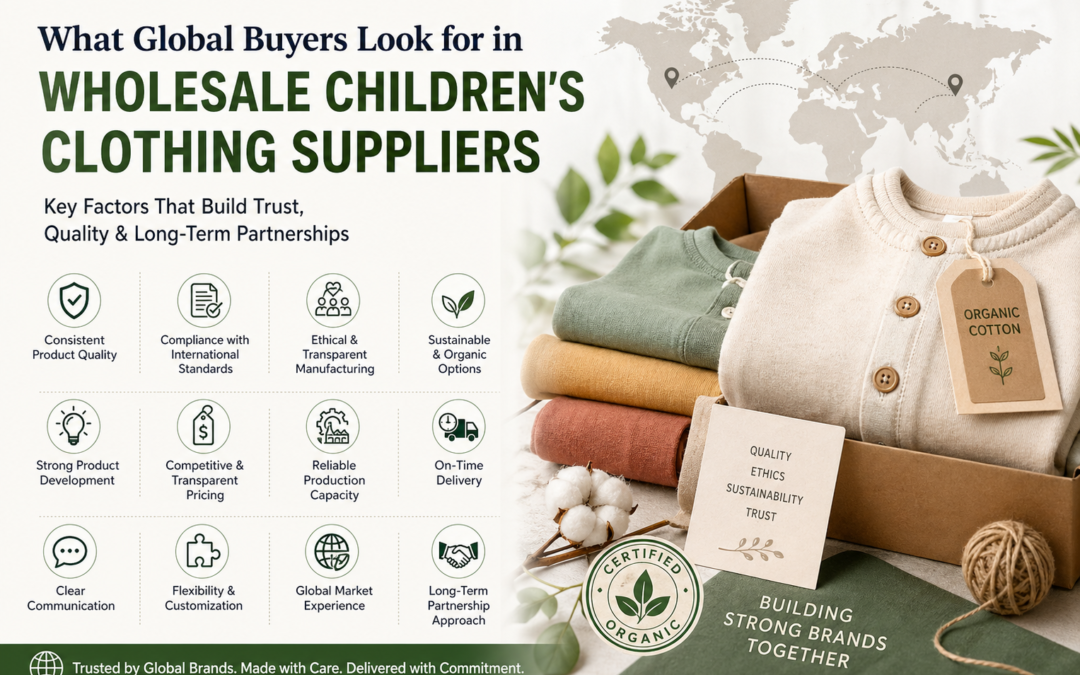
The global market for children’s clothing is growing fast, but so is the competition. For international brands and retailers, choosing the right wholesale supplier is no longer just about price. It’s about trust, consistency, compliance, and long-term partnership.
Whether buyers are sourcing from Europe, the US, Australia, or the Middle East, their expectations have evolved. They want suppliers who can meet strict quality standards, adapt to changing trends, and deliver on time without compromise.
For manufacturers like Organic & More, an India-based baby clothing exporter working with global brands, understanding these expectations is key. In this article, we’ll break down exactly what global buyers look for in wholesale children’s clothing suppliers, and why these factors matter more than ever.
1. Consistent Product Quality
Quality is the first thing buyers evaluate, and it’s often the reason they stay or leave.
Children’s clothing, especially for babies, requires extra attention. Buyers expect:
- Soft, skin-friendly fabrics
- Strong stitching that can handle wear and washing
- Colorfast dyes that don’t bleed
- Safe trims and accessories
A single quality issue can damage a brand’s reputation. That’s why buyers prefer suppliers who follow strict quality control at every stage, from fabric sourcing to final inspection.
At factories like Organic & More, maintaining consistency across bulk orders is just as important as delivering a perfect sample. Buyers want reassurance that what they approved is exactly what they will receive at scale.
2. Compliance with International Standards
This is non-negotiable.
Different markets have strict regulations for children’s clothing. Buyers expect suppliers to comply with:
- CPSIA (USA) safety standards
- REACH regulations (Europe)
- OEKO-TEX certification for textiles
- GOTS certification for organic products
Compliance includes:
- Chemical safety
- Fabric testing
- Labeling accuracy
- Child-safe design standards
Suppliers who already understand these requirements save buyers time, reduce risk, and build trust quickly.
Exporters from India, like Organic & More, often work with multiple global certifications, which makes them more attractive to international clients.
3. Transparency and Ethical Manufacturing
Today’s buyers care about how products are made, not just what is made.
Brands are under pressure to ensure ethical sourcing, and they expect the same from their suppliers. This includes:
- Fair wages and safe working conditions
- No child labor
- Clean and organized production facilities
- Transparent supply chains
Buyers may request audits or factory visits. Suppliers who are open, organized, and honest during these processes stand out.
Ethical manufacturing is no longer a “bonus.” It’s a requirement for doing business globally.
4. Sustainable and Organic Options
Sustainability has become a major decision factor.
Parents are increasingly choosing eco-friendly clothing for their children. As a result, brands look for suppliers who offer:
- Organic cotton
- Low-impact dyes
- Recycled or biodegradable materials
- Sustainable packaging
Suppliers who specialize in organic baby clothing, like Organic & More, have a strong advantage in this space.
Buyers want partners who can help them build a sustainable product line without compromising on quality or design.
5. Strong Product Development Capabilities
Global buyers don’t just want manufacturers. They want partners who can help bring ideas to life.
This includes:
- Sampling and prototyping
- Fabric sourcing suggestions
- Design improvements
- Trend insights
A supplier who can take a concept and turn it into a production-ready garment adds real value.
Fast and accurate sampling is especially important. Buyers often work on tight timelines, and delays at this stage can impact entire seasons.
6. Competitive and Transparent Pricing
Price always matters, but it’s not just about being the cheapest.
Buyers look for:
- Fair pricing based on quality
- Clear cost breakdowns
- No hidden charges
- Stability in long-term pricing
They understand that high-quality, compliant, and sustainable products come at a cost. What they want is transparency and value.
Suppliers who communicate openly about pricing build stronger, longer-lasting relationships.
7. Reliable Production Capacity
Scaling is a big concern for global brands.
A supplier may deliver well on small orders, but buyers want to know:
- Can you handle large volumes?
- Can you meet deadlines during peak seasons?
- Do you have backup systems in place?
Production delays can disrupt retail launches, cause stock shortages, and lead to financial losses.
Factories like Organic & More that have structured production systems and experienced teams are better equipped to handle these demands.
8. On-Time Delivery
Timelines are critical in the fashion industry.
Buyers plan collections months in advance. Late shipments can mean:
- Missed selling seasons
- Lost revenue
- Excess inventory
That’s why buyers prioritize suppliers with a proven track record of on-time delivery.
This includes:
- Efficient production planning
- Strong logistics coordination
- Clear communication during delays
Being reliable with timelines builds trust faster than anything else.
9. Clear and Responsive Communication
Good communication makes everything easier.
Buyers prefer suppliers who:
- Respond quickly to emails and queries
- Provide regular updates on orders
- Share production progress
- Communicate issues early
Language clarity and professionalism also matter.
Miscommunication can lead to errors, delays, and frustration. On the other hand, smooth communication creates confidence and long-term partnerships.
10. Flexibility and Customization
Every brand is different.
Buyers often need:
- Custom designs
- Private labeling
- Unique sizing requirements
- Special packaging
Suppliers who can adapt to these needs are more valuable.
Flexibility also includes handling small trial orders, especially for new brands testing the market.
A manufacturer who supports both small and large buyers has a wider appeal.
11. Experience with International Markets
Working with global buyers requires more than just manufacturing skills.
Suppliers need to understand:
- Export documentation
- Shipping processes
- Import regulations
- Packaging requirements for different countries
Experience reduces errors and delays.
Exporters like Organic & More, based in India, often have years of experience dealing with international clients, making the process smoother for buyers.
12. Strong Reputation and References
Before choosing a supplier, buyers do their research.
They look for:
- Client testimonials
- Existing brand partnerships
- Online presence
- Industry reputation
A supplier with a solid track record is easier to trust.
Word of mouth also plays a big role. A positive experience can lead to repeat business and referrals.
13. Quality Control Systems
Buyers want to know how quality is maintained at scale.
This includes:
- In-line inspections during production
- Final quality checks before shipment
- Third-party inspections when required
A structured quality control system reduces defects and ensures consistency.
Suppliers who share their QC process openly build confidence with buyers.
14. Innovation and Trend Awareness
The children’s clothing market evolves quickly.
Buyers look for suppliers who stay updated with:
- Fabric innovations
- New printing techniques
- Seasonal trends
- Consumer preferences
Suppliers who bring fresh ideas to the table become valuable partners, not just vendors.
15. Long-Term Partnership Approach
Finally, global buyers are not just looking for a one-time deal.
They want:
- Reliability over time
- Consistent quality
- Honest communication
- Mutual growth
A good supplier becomes part of the brand’s supply chain strategy.
Companies like Organic & More that focus on building long-term relationships rather than short-term transactions are more likely to succeed in the global market.
Conclusion
Choosing the right wholesale children’s clothing supplier is a critical decision for global brands. It affects product quality, brand reputation, and customer satisfaction.
Today’s buyers are looking for more than just manufacturing capability. They want partners who understand international standards, value sustainability, communicate clearly, and deliver consistently.
For Indian exporters like Organic & More, this presents a strong opportunity. With the right focus on quality, compliance, and customer relationships, suppliers can position themselves as trusted global partners.
In a competitive industry, the suppliers who succeed are the ones who combine craftsmanship with reliability and transparency. That’s what global buyers truly value.
Recent Comments