

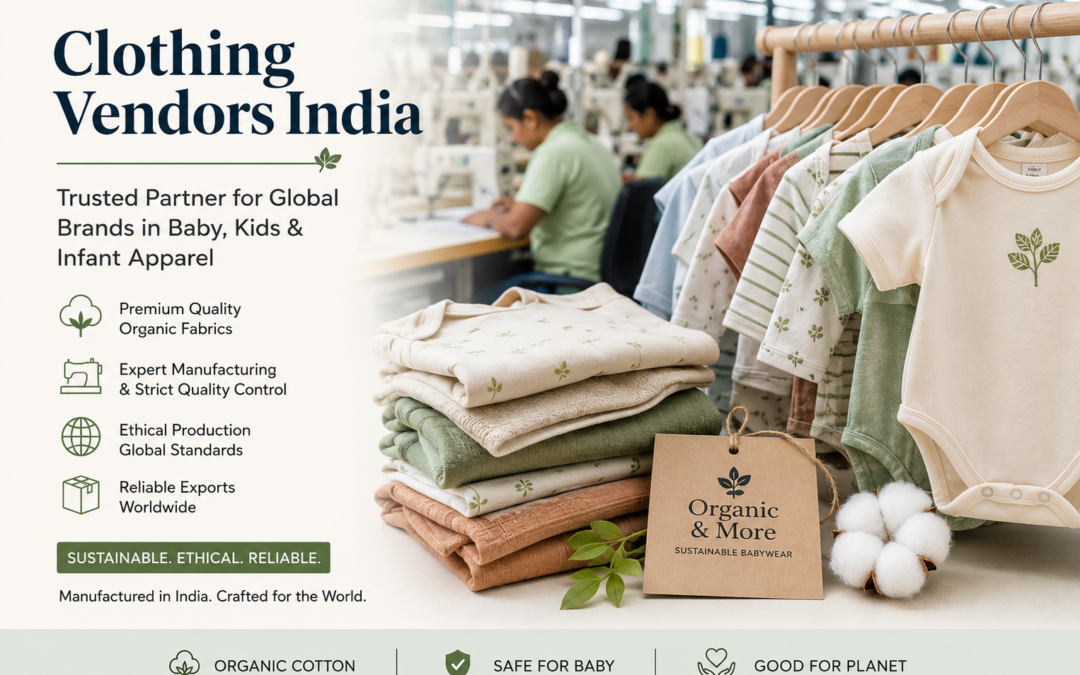
The global apparel industry is constantly evolving, with brands seeking manufacturing partners that can deliver quality, consistency, sustainability, and cost efficiency. Among the many sourcing destinations available today, India has emerged as one of the most trusted and preferred locations for apparel manufacturing. From established retailers to emerging direct-to-consumer brands, companies around the world are increasingly partnering with clothing vendors in India to develop and produce high-quality garments.
This trend is especially prominent in the baby, kids, and infant clothing segment, where quality standards, fabric safety, and ethical manufacturing practices are critical. Parents are becoming more conscious about what their children wear, creating strong demand for soft, safe, sustainable, and responsibly manufactured clothing.
India offers unique advantages in this market. The country has a rich textile heritage, extensive manufacturing capabilities, access to organic cotton, skilled labor, and decades of export experience. These strengths make Indian clothing vendors ideal partners for international brands looking to scale their businesses while maintaining high product standards.
In this article, we explore why clothing vendors in India have become the preferred choice for global brands and what businesses should consider when selecting a manufacturing partner.
India’s Position as a Global Apparel Manufacturing Hub
India is one of the world’s largest producers of textiles and garments. The country’s textile industry contributes significantly to its economy and provides employment to millions of workers across various manufacturing sectors.
For decades, India has supplied apparel to some of the world’s leading retailers, fashion brands, and private-label companies. The country’s manufacturing ecosystem supports a wide range of products, including:
- Baby clothing
- Infant apparel
- Children’s wear
- Women’s fashion
- Men’s apparel
- Sleepwear
- Loungewear
- Activewear
- Organic clothing
- Fashion accessories
Indian manufacturers have built strong reputations for producing quality garments while maintaining competitive pricing structures. This combination has helped position India as a major sourcing destination for brands across North America, Europe, Australia, and the Middle East.
Why Global Brands Prefer Clothing Vendors in India
1. Expertise in Baby and Children’s Apparel Manufacturing
Manufacturing baby and infant clothing requires specialized knowledge. Unlike adult apparel, children’s garments must meet strict quality and safety requirements.
International buyers expect manufacturers to understand:
- Child safety standards
- Fabric performance requirements
- Soft-touch fabric finishes
- Safe trims and accessories
- Comfortable garment construction
- Age-specific sizing standards
Indian clothing vendors have extensive experience producing products such as:
- Bodysuits
- Rompers
- Sleepsuits
- Baby sets
- Infant t-shirts
- Leggings
- Baby dresses
- Pajamas
- Newborn essentials
Manufacturers serving international markets understand the quality expectations of global consumers and have developed systems to consistently meet these requirements.
Access to High-Quality Organic Cotton
One of India’s biggest advantages is its strong position in organic cotton production.
As sustainability becomes increasingly important, brands are actively searching for manufacturing partners that can provide eco-friendly fabric solutions. Consumers are paying closer attention to how products are made and where raw materials originate.
Organic cotton offers several benefits:
Better for Sensitive Skin
Baby skin is delicate and highly sensitive. Organic cotton fabrics are generally softer and free from many of the harsh chemicals used in conventional cotton processing.
Environmentally Responsible
Organic farming practices reduce the use of synthetic pesticides and fertilizers, helping minimize environmental impact.
Consumer Demand
Parents increasingly prefer sustainable clothing options for their children. Offering organic products can help brands strengthen customer loyalty and differentiate themselves in competitive markets.
Many clothing vendors in India have established relationships with certified organic cotton suppliers, making it easier for brands to develop sustainable product collections.
Strong Manufacturing Infrastructure
India’s garment manufacturing sector has undergone significant modernization over the past two decades.
Today’s leading factories operate with advanced machinery and production systems that support:
- Pattern development
- Sampling
- Fabric inspection
- Cutting
- Sewing
- Printing
- Embroidery
- Finishing
- Quality control
- Packing
- Export logistics
This integrated approach enables manufacturers to manage production efficiently while maintaining quality standards.
For international brands, working with a vendor that can oversee multiple production processes under one roof often leads to:
- Faster lead times
- Better communication
- Improved quality consistency
- Lower operational complexity
Competitive Manufacturing Costs
Cost efficiency remains a key consideration for apparel brands.
India offers a strong balance between affordability and quality. While brands can find lower-cost options in certain regions, many choose India because it provides better value rather than simply the lowest price.
Factors contributing to cost competitiveness include:
- Large-scale textile production
- Skilled labor availability
- Strong domestic supply chains
- Extensive manufacturing infrastructure
- Access to raw materials
This allows brands to maintain healthy profit margins while delivering premium products to consumers.
The result is a sourcing model that supports both growth and long-term sustainability.
Skilled Workforce and Technical Expertise
India’s textile and garment sector benefits from generations of manufacturing expertise.
Workers across the industry possess specialized skills in:
- Garment construction
- Pattern making
- Sewing operations
- Quality inspection
- Fabric handling
- Embroidery
- Finishing techniques
This experience is particularly valuable in babywear manufacturing, where precision and consistency are essential.
Garments for infants require:
- Smooth seams
- Proper sizing
- Safe stitching methods
- Comfortable fits
- Durable construction
Experienced production teams help ensure these requirements are met throughout the manufacturing process.
Growing Focus on Sustainability
Sustainability has become one of the most important considerations in apparel sourcing.
Consumers increasingly want transparency regarding:
- Material sourcing
- Manufacturing practices
- Environmental impact
- Labor standards
- Product lifecycle
Indian clothing vendors are responding by investing in sustainable manufacturing initiatives, including:
Water Conservation
Many facilities have implemented systems to reduce water consumption during production.
Waste Reduction
Manufacturers are improving fabric utilization and recycling production waste whenever possible.
Renewable Energy
An increasing number of factories are adopting solar and other renewable energy solutions.
Sustainable Materials
Brands can access a wide range of eco-friendly fabrics, including:
- Organic cotton
- Recycled materials
- Sustainable blends
- Low-impact textiles
These initiatives help brands align with modern consumer expectations and sustainability goals.
Quality Control and Compliance Standards
Quality assurance is critical when manufacturing apparel for international markets.
Reputable clothing vendors in India typically implement quality control procedures at multiple stages of production.
These may include:
Fabric Inspection
Raw materials are checked before production begins.
In-Line Quality Checks
Garments are inspected throughout the manufacturing process.
Final Inspection
Completed products undergo detailed quality evaluation before shipment.
Packaging Verification
Labels, tags, barcodes, and packaging are reviewed for accuracy.
Strong quality systems help reduce:
- Defect rates
- Customer complaints
- Product returns
- Supply chain disruptions
This is especially important in babywear manufacturing, where quality expectations are exceptionally high.
Export Experience and Global Market Understanding
One major advantage of working with experienced Indian clothing vendors is their understanding of international business requirements.
Manufacturers serving global markets are familiar with:
- Import regulations
- Product compliance standards
- Labeling requirements
- Shipping documentation
- Customs procedures
- International logistics
This expertise reduces risk and simplifies the sourcing process for buyers.
An experienced export-focused manufacturer can help brands avoid common challenges while ensuring smoother order execution.
Product Development Support
Many modern apparel manufacturers offer more than production services.
They also assist brands with:
- Design development
- Fabric sourcing
- Trend research
- Sample creation
- Product engineering
- Collection planning
This collaborative approach can be particularly valuable for:
- Start-up brands
- Growing private labels
- Retail chains launching new collections
Having access to product development expertise helps accelerate innovation and reduce time to market.
The Rise of Ethical Manufacturing
Consumers increasingly care about how products are made.
As a result, brands are seeking manufacturing partners that prioritize:
- Fair labor practices
- Safe working conditions
- Employee welfare
- Responsible production systems
Many Indian apparel manufacturers have invested significantly in improving workplace standards and implementing ethical manufacturing practices.
This commitment not only benefits workers but also strengthens brand reputation in global markets.
How to Choose the Right Clothing Vendor in India
Selecting the right manufacturing partner is one of the most important decisions a brand can make.
Here are several factors to evaluate:
Industry Experience
Choose a vendor with proven expertise in your specific product category.
Manufacturing Capacity
Ensure the factory can support your current and future production needs.
Quality Systems
Review quality control procedures and inspection standards.
Communication
Effective communication is essential for successful partnerships.
Sustainability Capabilities
Evaluate available sustainable fabric and production options.
Export Experience
Look for manufacturers with a strong track record of international shipments.
Sampling Capabilities
Reliable sample development is often an indicator of manufacturing expertise.
Why Organic & More is a Preferred Manufacturing Partner
Organic & More is a specialized manufacturer of baby, kids, and infant apparel based in Noida, India.
We work exclusively with international brands and retailers, helping them develop premium-quality garments designed for global markets.
Our strengths include:
- Expertise in baby and children’s apparel
- Organic and sustainable fabric solutions
- Export-focused manufacturing
- High-quality production standards
- Product development support
- Ethical manufacturing practices
- Consistent quality control systems
We understand the unique requirements of international buyers and are committed to delivering products that meet the expectations of modern consumers.
Whether a brand is launching a new collection or expanding an existing product line, our team works closely with customers to ensure successful outcomes at every stage of the manufacturing process.
The Future of Clothing Vendors in India
The future of apparel manufacturing in India looks exceptionally promising.
Several factors continue to drive growth:
- Increasing demand for sustainable clothing
- Expansion of organic cotton production
- Growing global sourcing diversification
- Investments in manufacturing technology
- Rising demand for ethical production
As brands seek reliable and responsible manufacturing partners, India is well-positioned to strengthen its role as a leading apparel sourcing destination.
The country’s combination of manufacturing expertise, sustainability initiatives, skilled workforce, and export capabilities creates significant opportunities for global brands.
Conclusion
Clothing vendors in India have become trusted partners for international apparel brands because they offer far more than competitive pricing. They provide expertise, quality, sustainability, innovation, and global market experience.
For businesses operating in the baby, kids, and infant apparel sector, India offers particular advantages through its strong textile ecosystem, access to organic cotton, skilled manufacturing workforce, and commitment to quality standards.
As consumer expectations continue to evolve, brands need manufacturing partners that can support growth while maintaining product excellence and sustainability goals. By partnering with an experienced Indian manufacturer such as Organic & More, global brands can build strong supply chains, develop high-quality products, and create long-term success in international markets.
Recent Comments