

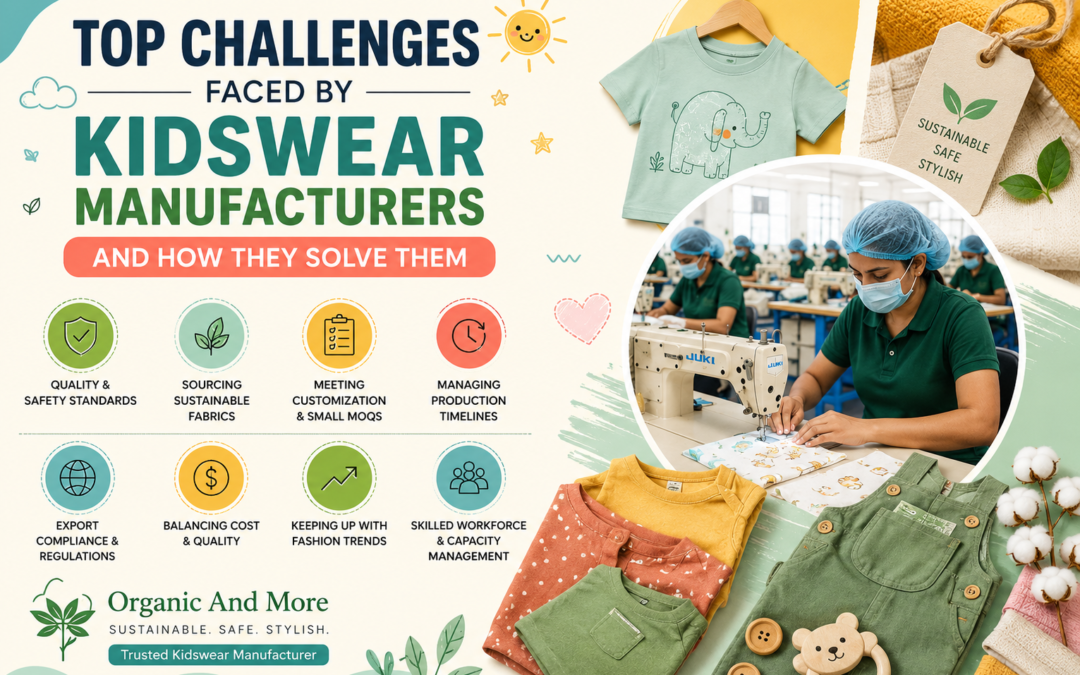
The global children’s apparel market is growing rapidly as parents become more conscious about quality, comfort, sustainability, and fashion. From newborn essentials to trendy toddler outfits, the demand for stylish and safe clothing continues to increase across domestic and international markets. However, behind every successful clothing line lies the hard work and expertise of experienced kidswear manufacturers who handle production challenges every day.
Whether serving fashion startups, wholesalers, private label buyers, or export clients, kidswear manufacturing requires precision, flexibility, and strict quality standards. Unlike adult apparel, children’s clothing must meet higher expectations for safety, softness, durability, and functionality.
At Organic And More, we understand the real-world challenges that manufacturers face and the strategies required to overcome them successfully. In this blog, we’ll explore the biggest obstacles in the kidswear industry and how modern manufacturers solve them efficiently.
1. Maintaining High Safety Standards in Kidswear
One of the biggest challenges for kidswear manufacturers is ensuring product safety. Children have delicate skin, and poorly manufactured garments can cause irritation, allergies, or even accidents.
Common Safety Concerns:
- Harmful dyes and chemicals
- Loose buttons or accessories
- Sharp zippers or unsafe trims
- Poor stitching quality
- Fabric shrinkage issues
Parents today are highly aware of product safety, especially in babywear and toddler clothing. International markets also have strict compliance requirements.
How Manufacturers Solve This:
Leading manufacturers use:
- Organic and skin-friendly fabrics
- AZO-free dyes
- Child-safe accessories
- Quality control inspections
- International compliance testing
At Organic And More, safety is integrated into every stage of production, from fabric sourcing to final packaging. This helps build trust among export clients and global buyers.
2. Balancing Fashion Trends with Comfort
Kids today are becoming fashion-conscious at an early age. Parents want trendy outfits, but comfort remains the top priority.
The Challenge:
Fashion trends change rapidly, and manufacturers must keep up while ensuring:
- Soft fabric feel
- Breathability
- Easy movement
- Durability for active kids
Many designs that look attractive may not be practical for children.
The Solution:
Experienced kidswear manufacturers combine trend research with functional design. They:
- Use stretchable fabrics
- Create ergonomic fits
- Focus on lightweight materials
- Test garments for comfort and movement
Manufacturers also collaborate with designers and fashion startups to create collections that are both stylish and wearable.
3. Managing Fabric Sourcing and Quality
Fabric quality directly affects customer satisfaction. Inconsistent fabric sourcing can lead to:
- Color variation
- Shrinkage
- Low durability
- Delayed production timelines
For children’s clothing, fabric softness and safety are even more important.
How Manufacturers Handle It:
Professional manufacturers establish long-term partnerships with trusted fabric suppliers. They conduct:
- Fabric testing
- GSM checks
- Colorfastness tests
- Shrinkage control procedures
Organic cotton has become increasingly popular among eco-conscious parents and international buyers. Manufacturers focusing on sustainable production often gain an advantage with private label buyers looking for premium collections.
4. Handling Small MOQ Requirements from Fashion Startups
Many emerging clothing brands and fashion startups want customized products in smaller quantities. However, low Minimum Order Quantities (MOQs) can be difficult for factories because production costs increase.
The Challenge:
Small orders require:
- More customization
- Frequent pattern changes
- Higher operational costs
- Complex inventory planning
The Solution:
Modern kidswear manufacturers are adapting by offering flexible MOQs and scalable production systems.
Manufacturers solve this by:
- Using efficient production planning
- Digitizing pattern development
- Offering ready stock fabrics
- Streamlining sampling processes
This flexibility helps startups launch collections without investing heavily in inventory.
5. Ensuring Consistent Sizing and Fit
Children grow quickly, and sizing standards vary from country to country. A size chart suitable for one market may not fit another.
Problems Manufacturers Face:
- Inconsistent measurements
- High return rates
- Customer dissatisfaction
- International size conversion issues
How They Solve It:
Top manufacturers develop standardized grading systems and detailed measurement charts.
For export clients, manufacturers often create:
- US sizing standards
- UK sizing standards
- European fit specifications
- Customized brand measurements
Fit samples are tested carefully before bulk production begins.
6. Managing Seasonal Demand Fluctuations
The kidswear industry is highly seasonal. Manufacturers often face sudden spikes in demand during:
- Festivals
- Holiday seasons
- Back-to-school periods
- Summer and winter launches
The Challenge:
Factories may experience:
- Production bottlenecks
- Labor shortages
- Delayed shipments
- Inventory management issues
The Solution:
Efficient production planning is the key.
Experienced kidswear manufacturers solve this by:
- Forecasting demand early
- Increasing workforce capacity seasonally
- Maintaining fabric inventory
- Using automated production tracking systems
This allows manufacturers to fulfill orders for wholesalers and retailers on time.
7. Meeting Customization Requirements for Private Label Buyers
Customization is one of the biggest demands in modern apparel manufacturing. Many private label buyers want:
- Custom logos
- Unique packaging
- Exclusive prints
- Personalized sizing
- Brand-specific labels
The Challenge:
Handling multiple customized orders simultaneously can create confusion and production delays.
The Solution:
Professional manufacturers establish dedicated private label production systems.
This includes:
- Separate sampling teams
- Digital approval systems
- Organized SKU management
- Barcode tracking
- Clear communication channels
At Organic And More, private label manufacturing is handled with precision to ensure every client receives consistent branding and product quality.
8. Maintaining Affordable Pricing While Preserving Quality
Price competition in the apparel industry is intense. Buyers often expect premium quality at lower prices.
Challenges for Manufacturers:
- Rising raw material costs
- Increasing labor expenses
- Shipping charges
- Currency fluctuations
How Manufacturers Solve It:
Successful kidswear manufacturers improve operational efficiency through:
- Bulk fabric purchasing
- Waste reduction
- Advanced cutting techniques
- Lean manufacturing processes
- Smart inventory management
The goal is to maintain quality without compromising affordability for wholesalers and global buyers.
9. Dealing with Export Compliance and International Regulations
Working with export clients involves strict compliance standards. Different countries have different regulations regarding:
- Fabric composition
- Labeling
- Packaging
- Chemical usage
- Product testing
The Challenge:
Failure to comply can result in:
- Shipment rejection
- Financial losses
- Damaged reputation
The Solution:
Export-focused manufacturers stay updated with global standards and certifications.
They implement:
- Compliance audits
- Lab testing
- Documentation systems
- International shipping standards
Manufacturers with export expertise are more attractive to international retailers and distributors.
10. Reducing Production Lead Time
Fast delivery has become essential in modern fashion retail. Buyers want quicker production cycles to respond to market trends.
Common Production Delays:
- Fabric sourcing issues
- Sampling approvals
- Printing delays
- Logistics disruptions
How Manufacturers Improve Lead Times:
Efficient factories use:
- Digital production planning
- In-house sampling
- Streamlined workflows
- Real-time order tracking
This helps fashion startups, retailers, and private label buyers launch collections faster.
11. Sustainability and Eco-Friendly Manufacturing
Sustainability is no longer optional in the fashion industry. Parents increasingly prefer eco-friendly clothing for their children.
The Challenge:
Sustainable manufacturing often involves:
- Higher material costs
- Certification requirements
- Complex sourcing
The Solution:
Forward-thinking kidswear manufacturers adopt:
- Organic cotton fabrics
- Water-saving production methods
- Recyclable packaging
- Ethical labor practices
Sustainable manufacturing not only helps the environment but also strengthens brand positioning among modern consumers.
At Organic And More, eco-conscious production practices support the growing demand for responsible children’s fashion.
12. Managing Quality Control Across Large Orders
When producing large quantities, maintaining consistent quality becomes challenging.
Common Quality Issues:
- Stitching inconsistencies
- Color mismatch
- Printing defects
- Measurement variations
How Manufacturers Solve It:
Professional factories implement multi-stage quality inspections:
- Fabric inspection
- Inline production checks
- Final garment inspection
- Packaging verification
This ensures every product meets the required standards before shipment.
13. Keeping Up with Technology and Innovation
Technology is rapidly transforming the apparel industry. Manufacturers who fail to adapt may struggle to stay competitive.
Modern Industry Challenges:
- Digital transformation
- Automated production systems
- E-commerce demand
- Faster design cycles
The Solution:
Modern kidswear manufacturers invest in:
- CAD pattern-making software
- Automated cutting machines
- ERP systems
- Digital inventory management
Technology improves efficiency, accuracy, and communication with clients worldwide.
14. Building Trust with Buyers and Long-Term Clients
Trust is one of the most important factors in the apparel business. Buyers want reliable manufacturing partners who deliver quality consistently.
Common Buyer Concerns:
- Missed deadlines
- Poor communication
- Inconsistent quality
- Hidden costs
How Manufacturers Build Strong Relationships:
Reliable manufacturers focus on:
- Transparent communication
- Timely updates
- Ethical business practices
- Consistent quality delivery
Long-term relationships with wholesalers, private label buyers, and export clients help create sustainable business growth.
Why Choosing the Right Kidswear Manufacturer Matters
The success of any children’s clothing brand depends heavily on the manufacturer behind it. Whether you are a startup launching your first collection or an established retailer expanding globally, choosing experienced kidswear manufacturers can significantly impact your business growth.
The right manufacturing partner helps with:
- Product quality
- Timely delivery
- Customization
- Compliance
- Cost management
- Brand reputation
A manufacturer who understands both fashion and functionality can help brands create clothing that parents trust and children love.
Final Thoughts
The kidswear industry offers tremendous opportunities, but it also comes with unique manufacturing challenges. From safety compliance and sustainable production to customization and export management, successful manufacturers must balance quality, efficiency, and innovation.
At Organic And More, we believe that overcoming these challenges requires experience, advanced production systems, and a commitment to quality. By continuously adapting to market demands, modern technology, and sustainable practices, manufacturers can deliver exceptional products for fashion startups, wholesalers, private label buyers, and export clients around the world.
As the demand for high-quality children’s clothing continues to rise, manufacturers who prioritize safety, comfort, sustainability, and reliability will lead the future of the global kidswear industry.
Recent Comments